
Stay Connected
Sign up to receive our newsletter straight to your mailbox.

Thank you! Your submission has been received!
Oops! Something went wrong while submitting the form.


A marriage proposal. A firing. A contract negotiation. On the surface, these moments have nothing in common. But look closer, and you’ll see they are all doing the same thing: we stop talking about the world and start talking about each other.
This is relational meta-communication—one of the most consequential skills most of us are already using, often without realizing how we’re doing it, or even that we’re doing it at all.
Some relational moments are impossible to miss.
A marriage proposal doesn’t merely express love. It has the power to take a relationship to another level.
A termination conversation doesn’t just communicate a decision. It reshapes roles, obligations, and future contact.
A business negotiation doesn’t only exchange terms. It establishes expectations, power, and trust going forward.
In moments like these, most of us intuitively grasp that the relationship itself is what’s under discussion—even when we haven’t exactly put it in those terms.
These are all clear examples of relational communication: conversations where the primary function is to address the nature, direction, or structure of a relationship.
But relational communication doesn’t only show up in moments this dramatic.
Relational communication also shows up in ordinary, low-stakes moments:
“Can we pick this up later?”
“I’m not sure I’m following—can you say that another way?”
“Before we go on, I want to check that we’re aligned.”
“I really appreciated how we handled that.”
Nothing life-altering here. And yet, in each case, attention briefly shifts from the topic of conversation to the conversation itself—how it’s unfolding and how the interaction is being experienced.
Even simple acts like steering a meeting back to the agenda or closing a topic are forms of relational communication because they’re about shaping the interaction itself, not just contributing content. Most of us recognize the difference between a meeting that’s being guided well and one that isn’t.
This shift is easy to miss. It happens so frequently that we’re barely aware we’re doing it.
But functionally, it’s the same move as the big moments: intentionally bringing the relationship into awareness and using conversation to guide it—shifting the interaction into the relational mode.
Relational communication is communication where the primary focus, or a key aspect, is the relationship between the participants. It's the conversation about the conversation—moments where attention shifts from what you're talking about to how you're relating.
Relational communication is the conversation about the conversation—when attention shifts from what you're talking about to how you're relating.
Between the big, unmistakable moments and the small, easily overlooked ones sits a quieter layer—one that shapes interactions prior to anyone talking explicitly about the relationship itself.
Communication clearly transmits information—sharing ideas, facts, or opinions about the world. Less obvious is that every message also carries implicit information about the relationship between the people involved. Communication scholars call this the relational dimension of communication.
Through tone, timing, context, word choice, and body language, messages signal how much trust exists, who has influence, how safe it feels to speak freely, and what kind of connection is expected.
Relational meaning can also be conveyed through what we choose to disclose. For example, sharing something difficult, uncertain, or vulnerable can signal a level of trust, closeness, or a desire for support, even when this isn’t spelled out directly.
Most of the time, these relational signals remain implicit, because each person’s unspoken understanding of the relationship is largely aligned with the other’s. When that’s true, things tend to work just fine with that layer remaining in the background.
The relational dimension carries implicit information about the relationship between the people communicating.

For example, imagine a colleague says:
“Can you send me that by end-of-day?”
If both of you already share a similar understanding of your working relationship—how urgent requests usually are, how flexible deadlines tend to be, how much autonomy is expected—the meaning is clear. Maybe it’s said casually, or paired with an easy tone that signals trust. Maybe it’s coming from someone who rarely pressures others and generally trusts them to manage their time. In situations like these, the request feels ordinary. Nothing additional needs to be clarified.
Now, imagine how the exact same request could land differently. Consider a scenario where someone makes the same request, using identical words; the content hasn’t changed. But what has changed is the relational implication.

Perhaps the tone is clipped, or unusually formal. Maybe it’s sent late in the day, or just after the end of a tense meeting. Maybe it comes from someone who has recently expressed dissatisfaction, or who tends to escalate when things aren’t done exactly their way. Or, maybe it’s from a manager or client who’s had a history of mixed signals around deadlines and expectations.
None of these things are said outright. And yet they shape how you experience the request.
A slight change in tone, a pause where there’s usually warmth, a piece of context that makes the timing feel loaded rather than neutral—these differences can make the same sentence carry more weight.
It might feel like pressure. Or scrutiny. Or a test. Your nervous system picks up on these cues before your mind has time to reason them through. Is this still just coordination, or is something else being communicated?
When those implicit signals feel unclear, unexpected, or mismatched, the conversation can no longer rely on the background layer alone.
You might pause and say:
“I’ve got a lot to get done before the end of day. Can I check how urgent this actually is? That’ll help me assess what I can reprioritize.”
That question isn't about the task—it's relational communication, addressing how you're interacting rather than just what you're talking about.
You might be tracking all of this and still find yourself hesitating—wondering whether a conversation like this is really necessary.
For a long time, these kinds of conversations felt uncomfortable to me—like something best avoided, postponed, or worked around. They seemed risky, inefficient, or likely to make things worse rather than better. Relationships mattered to me, but I hadn’t yet learned how much these conversations actually shaped them.
That discomfort is partly why we don’t always speak up right away. Instead of getting a clean, in-the-moment clarification, we often wait to address the relationship more directly—once something has had time to settle.
So you might not know just what to say to keep the interaction on track—like checking urgency before reprioritizing your day. And that’s normal.
More commonly, something leaves an impression without fully coming into focus. A request lands with a little extra weight. A tone feels off. A moment lingers longer than expected. We move on, but the sense of it doesn’t quite disappear.
Maybe you didn’t pause to check how urgent the task really was. You did what had to be done to get it done by the end of the day, made a mental note, and kept going.
Then something similar happens again.
Another request with the same edge. A tightness in your shoulders, a familiar sense of pressure and uncertainty.
At that point, it’s no longer just a one-off moment; a pattern seems to be at work.
Once you’ve gathered your thoughts, you’ll know more clearly what you’d like to say before bringing it up:
“Can we talk for a minute? A few of our recent exchanges have left me feeling uncertain how urgent some things really are when deadlines are approaching. I’d like to be able to prioritize things more clearly and easily in a way that works for both of us.”
This delay is normal. We often feel tension before we can explain it, and detect patterns before we have language for them.
In those cases, relational communication doesn’t happen in the moment; it happens after the moment, once there’s enough signal to help you make sense of what’s been going on.
Relational communication—whether immediate or delayed—allows tension to become shared and workable, instead of private and corrosive.
Over time, the quality of these conversations reliably shapes the quality of our relationships, whether we attend to them deliberately or not. This is because relational communication is essential for relationships to adapt, evolve, and stay aligned with changing circumstances.
Relational communication is essential for relationships to adapt, evolve, and stay aligned with changing circumstances.
When we do decide to talk explicitly about a relationship, we’re usually trying to get oriented in one of a few basic ways.
Sometimes we’re trying to make sense of what’s already happened. A moment didn’t land well. Something keeps coming to mind. There’s a story we’ve been carrying about how things have been going. Or, just as often, something meaningful happened and we want to acknowledge it—or understand it more fully. In these cases, relational communication often sounds like:
“Here’s how that came across for me.”
“I’ve been thinking about what happened last week.”
“I really appreciated how we handled that.”
“I want to clear up something that’s been sitting with me.”
At other times, the focus is on what’s happening right now. The interaction feels tense. Or warm. Or unexpectedly alive. Something might feel off or unspoken. We notice ourselves leaning in—or pulling back. Communicating about this can sound like:
“This feels a little strained to me.”
“I’m noticing I’m holding back.”
“I’m actually really enjoying how this is going.”
“I want to check in on how this is feeling for you at this moment.”
And sometimes, what we’re really trying to do is shape what happens next. We want something to change. Or we want to protect what’s already working. We want to make a request, set an expectation, or clarify a direction the relationship seems to be heading. These conversations often start off like:
“Here’s what I’d like to do differently.”
“Can we figure out how we’ll handle this next time?”
“I want to be clearer about what I need moving forward.”
“I’d like to keep building on what’s been working between us.”
Although these address different parts of a relationship's timeline, they serve the same underlying function: helping us orient our shared understanding of the relationship so we're not operating on outdated assumptions.
Across work, family, friendship, and intimacy, we find ourselves having these conversations whenever relationships matter.
Relational communication helps living relationships continually re-orient as circumstances, roles, and expectations evolve—not just resolve isolated moments.
Relational communication orients a relationship by addressing the past, present, or future.
So far we've seen how relational communication ranges from dramatic moments to everyday interactions, clarifies implicit signals, and orients toward past, present, or future. Now let's look at where this shows up in professional practice.
Once relational communication becomes visible in your daily interactions, you start seeing it everywhere—including places where it's been systematically developed without being named as such.
Across professional domains, it can seem like we’re learning entirely different communication skills—negotiation, performance feedback, mediation, leadership conversations, change management. Each comes with its own models, best practices, and specialized vocabulary. But when we look closely at what actually works in these situations, they start looking more similar than different.
Despite the varied labels, what makes these conversations work is the same core move: using communication to shape trust, expectations, authority, and coordination in real time.
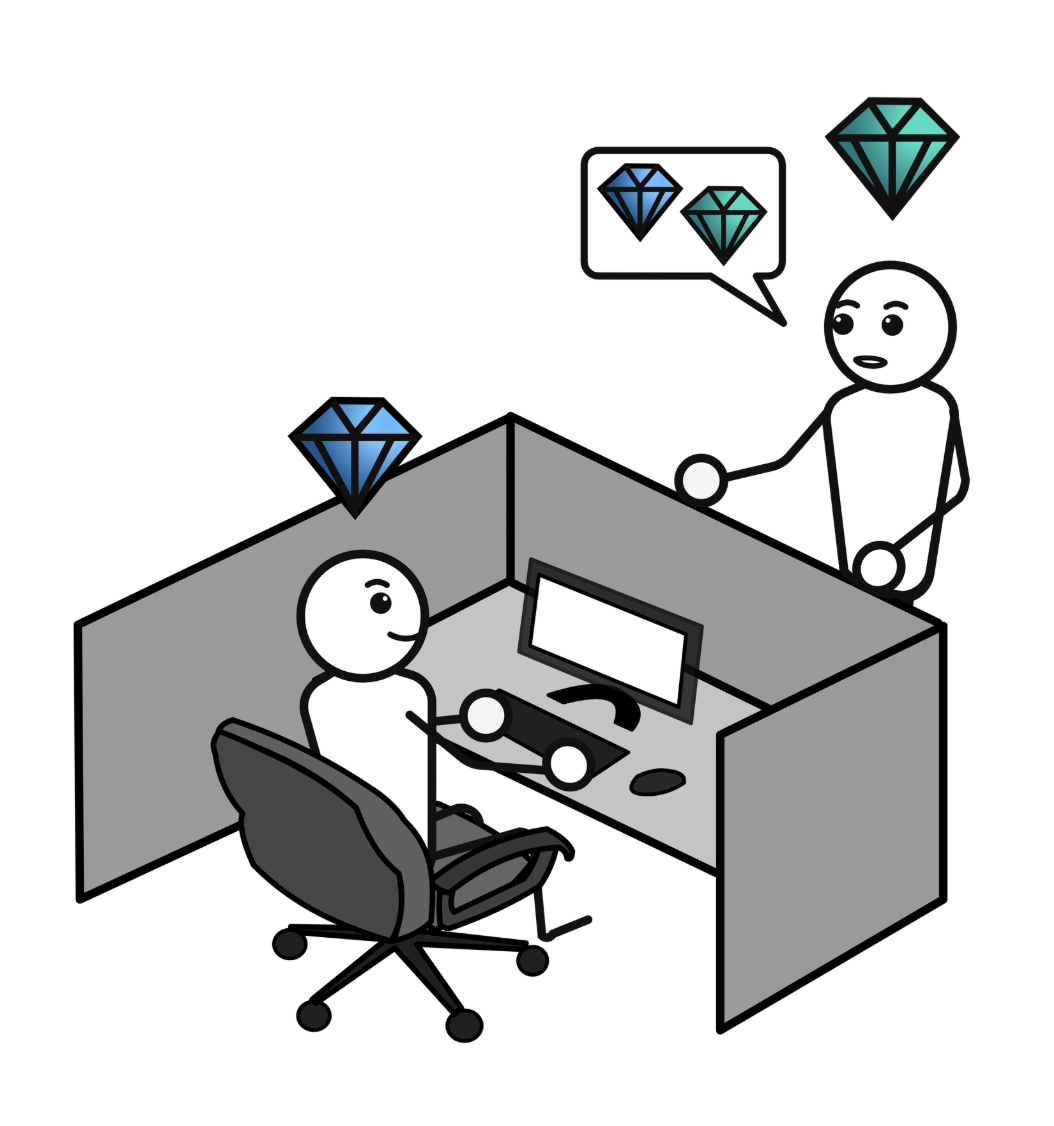
When negotiations work, it’s rarely because someone argued their position better. More often, it’s because interests were made explicit, trust was established, the process was clarified when things bogged down, and small breakdowns were handled before they escalated. In practice, what actually moves negotiations forward is our ability to talk about the relationship and the process—not just the deal.
We’ve all seen feedback fall flat even when it’s technically correct. What makes the difference is rarely precision or intensity. It’s whether impact is described without blame, understanding is checked rather than assumed, expectations are clarified, and respect for the person is maintained while addressing behavior. The critique matters—but how it’s offered is what shapes trust, receptivity, and the working relationship that follows.
In conflict resolution, progress usually doesn’t come from figuring out who has the better argument. It emerges when the conversation slows down—when assumptions and interpretations are surfaced, what actually matters becomes clearer, and shared language is created for what comes next. What mediators rely on isn’t magic—it’s structured relational communication, making the dynamics between people explicit enough to be worked with.
What varies across domains is mostly the language we use, not the underlying activity. In business: alignment, stakeholders, expectations, accountability. In personal contexts: feelings, needs, boundaries, repair. Yet the underlying task is the same: using conversation to actively shape how we're relating to one another.
Once this becomes visible, many so-called “best practices” stop looking like separate techniques and start revealing themselves as different ways of doing the same relational work
Best practices are not separate techniques, but different ways of describing the same relational work.
Once you start noticing relational communication, this realization often follows:
“Oh. I’ve been doing versions of this all along. I just didn’t have a clear way to think about it—or do it consistently.”
That recognition matters. It lowers the stakes.
Relational communication isn’t exotic or rare. It isn’t reserved for therapists, mediators, or people who are “good with feelings.” It’s already woven into daily life—at work, at home, and everywhere people coordinate, disagree, repair, and move forward together.
What changes isn’t whether we’re having these conversations. What changes is whether we’re aware of them while they’re happening.
Learning to see relational communication doesn’t suddenly make relationships easy or frictionless. It simply makes visible something that was already at play in our connections—often quietly, sometimes painfully, occasionally beautifully.
Relational communication is where your relational intelligence becomes legible to others—where it moves from private understanding into something people can respond to, work with, and learn alongside you.
Relational communication is how your relational intelligence moves from private understanding into something people can respond to and work with.
At that point, a natural question tends to arise:
If this is already happening, how do we work with it more deliberately?
This is the gap MetaRelating is designed to address.
MetaRelating is a learnable, practice-based framework for working with relational communication explicitly and deliberately. It treats relationships not as fixed things, but as living systems that evolve through conversation. Tension isn’t a problem to eliminate; it’s a signal that the relationship itself may need attention.
Rather than offering a single technique, MetaRelating integrates insights that many fields have arrived at independently:
From business and leadership: alignment, feedback, negotiation
From mediation and conflict resolution: slowing down, clarifying meaning, repairing trust
From intimate and family relationships: naming feelings, needs, and expectations explicitly
From communication theory and systems thinking: the idea that relationships are shaped through how we communicate about them
Rather than replacing these domains, MetaRelating offers a common language and set of practices for working at the relational core they share, whether the context is professional, personal, or somewhere in between. There's a reason it's called MetaRelating.
For most people, it’s less like attempting something entirely novel and more like finally having structure for something they’ve been doing intuitively, inconsistently, or under pressure.
It’s not about becoming more extroverted, emotionally expressive, or otherwise changing your personality. It’s about becoming more relationally literate—better able to notice when a relationship needs attention, and more capable of addressing that moment with clarity, care, and agency.
Over time, these conversations start to feel less mysterious or overwhelming—and more workable.
And relationships—at work, at home, and everywhere in between—become less something that simply happens to us, and more something we can participate in consciously, together.
